 PickGuide
QIDI Q2 Review: Is Their Best-Seller Worth It?
QIDI's best-seller is the Q2, an enclosed CoreXY 3D printer aimed at both beginners and anyone who wants to print engineering-grade materials like PA, PC, and carbon/glass-fiber reinforced polymers, not just PLA. At $499 it competes directly against some well-known enclosed printers, so we checked whether the spec sheet, warranty, and real review base back that up.
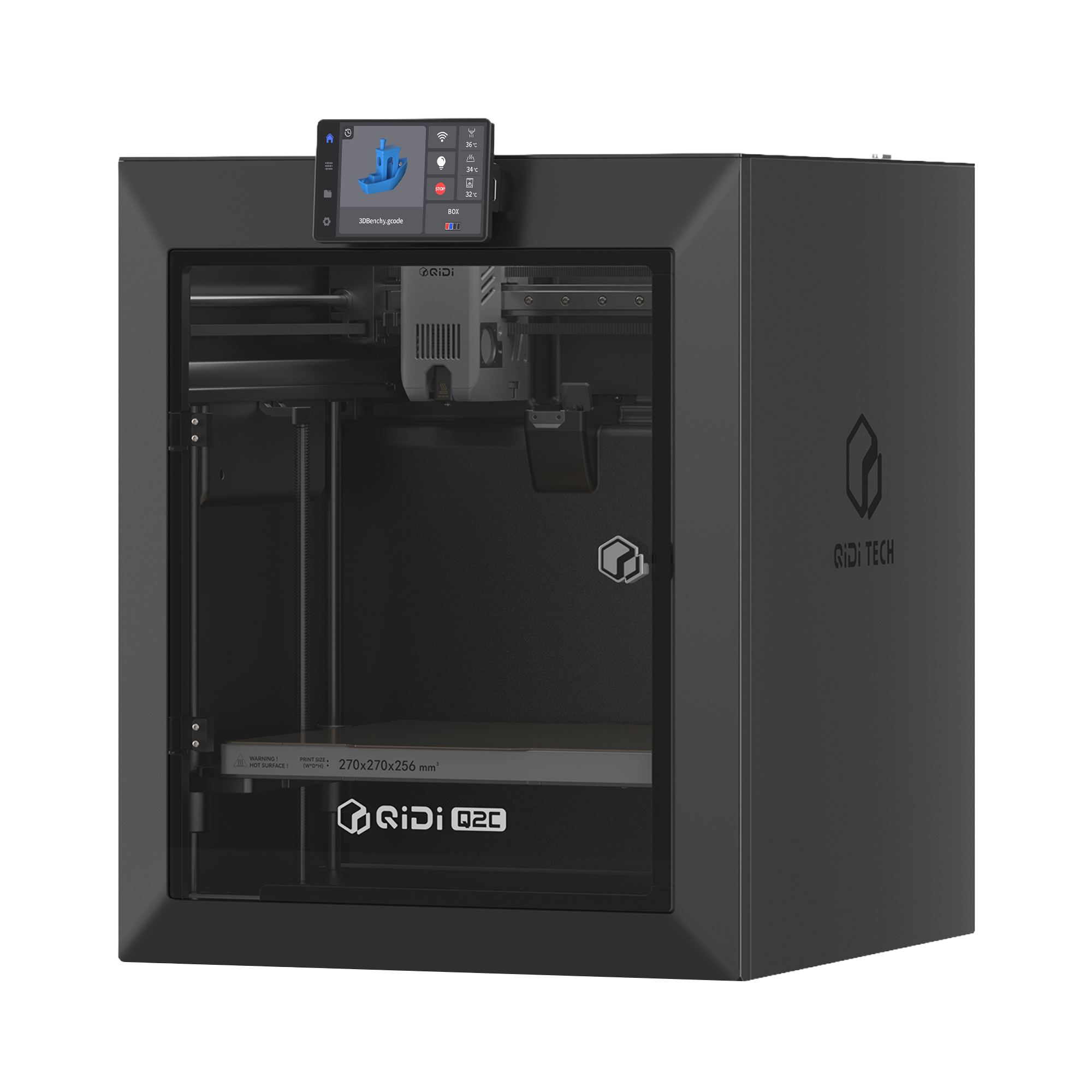
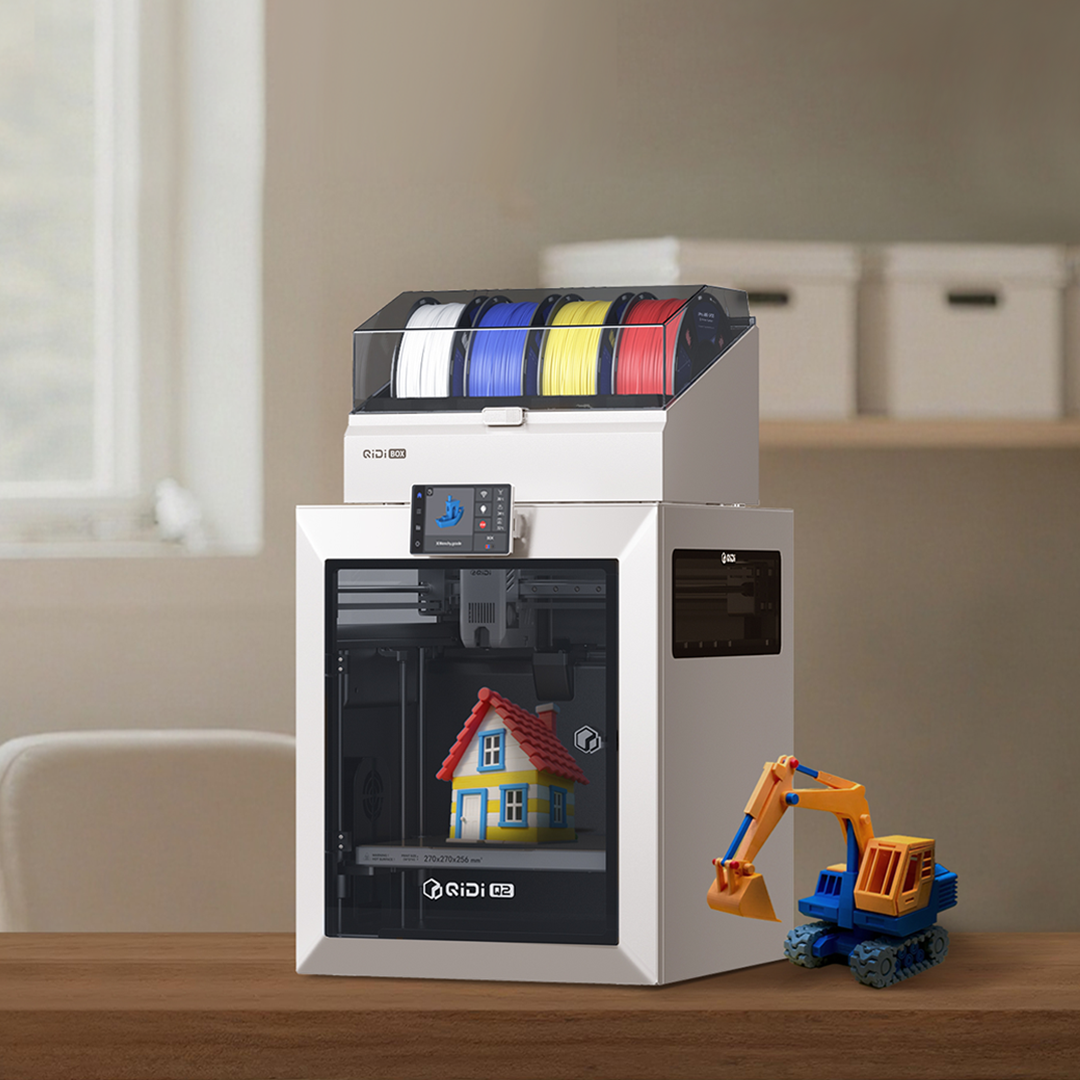
The Q2 is a CoreXY printer with a 270×270×256mm build volume, a bimetal nozzle rated up to 370°C, and a hot bed up to 120°C — high enough for PLA, ABS, ASA, PETG, TPU, PA, PC, and fiber-reinforced filaments, not just basic plastics. It uses dual independent lead screw motors on the Z axis, a hardened-steel-geared direct extruder, and hands-free automatic leveling via a loadcell sensor built into the hotend. A second-generation active chamber heater reaches up to 65°C, paired with a 3-in-1 air filtration system (G3 pre-filter, H12 HEPA, and activated carbon) for cleaner printing of higher-temperature materials indoors. It includes an AI camera for print monitoring, a 4.3-inch touchscreen, and connects via 2.4GHz Wi-Fi, Ethernet, or USB, with slicing support through QIDI Studio or third-party tools like Orca and PrusaSlicer. It's also compatible with the optional QIDI Box for multi-color/multi-material printing. On-site, it holds a 4.9/5 rating from 255 reviews — a large, real sample. Independently, QIDI's Trustpilot page shows 4.3/5 from 635 reviews, 79% five-star, with an active company Discord community for owner support.
Pros
- Large, real review base on both counts: 4.9/5 from 255 on-site reviews, 4.3/5 from 635 independent Trustpilot reviews
- 370°C max nozzle temperature and 65°C active chamber heating open up engineering materials (PA, PC, carbon/glass fiber) most budget printers can't handle
- Hands-free automatic leveling with a loadcell sensor, plus filament run-out and tangle detection
- 3-in-1 air filtration (HEPA + activated carbon) for safer indoor printing of higher-temp materials
- 1-year warranty globally, extended up to 2 years for EU/Switzerland/Norway/Iceland buyers per local law
Cons
- 14-day return window is on the shorter side for a $499 purchase
- Consumable parts (nozzles, belts, build plate, PTFE tubes) are explicitly excluded from warranty coverage
- Multi-color printing requires the separately-sold QIDI Box add-on, not included in the base price
- 11% of independent Trustpilot reviews are 1-star — a real minority reporting significant issues despite the strong overall average
- 23.5kg (about 52 lbs) gross shipping weight — factor in setup space and mobility before ordering
Who It's For
Good For
- Buyers who want to print engineering-grade materials (PA, PC, fiber-reinforced filaments) alongside standard PLA/PETG
- Anyone who wants hands-free auto-leveling and print monitoring rather than manual calibration
- Buyers who want to check a large, real review base — both on-site and independent — before a $499 purchase
Skip If
- You only print PLA and don't need high-temperature material support — a cheaper printer may suffice
- You want multi-color printing included out of the box rather than as an add-on
- You want more than a 14-day window to decide on a return
How It Compares: QIDI Q2 vs Bambu Lab P1S
| Spec | QIDI Q2 | Bambu Lab P1S |
|---|---|---|
| Price | $499.00 | $399.00 |
| Build volume | 270 x 270 x 256mm | 256 x 256 x 256mm |
| Max nozzle temp | 370°C | 300°C |
| Chamber heating | Active, up to 65°C | Active/passive, 40-65°C |
| Structure | CoreXY, dual Z lead screws | CoreXY |
The P1S is $100 cheaper and a well-established name with a large ecosystem, but the Q2's higher 370°C nozzle ceiling and larger build volume open the door to more engineering materials (PA, PC, carbon-fiber blends) that the P1S's 300°C limit can't reach. If you mainly print PLA/PETG/ABS, the P1S's lower price is hard to argue with; if higher-temperature engineering filaments matter to you, the Q2's extra headroom justifies the $100 difference.
Verified Ratings
Key Specs
| Build volume | 270 x 270 x 256mm |
| Structure | CoreXY, 1.5GT belt, dual independent Z lead screw motors |
| Nozzle | Bimetal, up to 370°C, 0.4mm (0.2/0.6/0.8mm optional) |
| Hot bed | Up to 120°C, dual-sided textured PEI plate |
| Chamber heating | 2nd-gen active PTC heater, up to 65°C |
| Air filtration | 3-in-1: G3 pre-filter + H12 HEPA + activated carbon |
| Leveling | Automatic, loadcell sensor integrated into hotend |
| Max speed | 600mm/s, up to 20,000mm/s² acceleration |
| Connectivity | 2.4GHz Wi-Fi, Ethernet, USB, QIDI Cloud |
| Display | 4.3-inch 480x272 touchscreen |
| Warranty | 1 year globally; up to 2 years in EU/Switzerland/Norway/Iceland |
| Returns | 14 days |
Frequently Asked Questions
Can the QIDI Q2 print multi-color objects?
Yes, but only with the separately-sold QIDI Box add-on connected. The base Q2 printer on its own prints single-color/single-material only.
What materials can the Q2 actually print?
QIDI lists PLA, ABS, ASA, PETG, TPU, PA (nylon), PC, and carbon/glass fiber reinforced polymers as supported, backed by the 370°C max nozzle temperature and 65°C active chamber heating needed to print higher-temperature engineering filaments successfully.
Verdict
The Q2 backs up its position with genuine engineering-grade capability — a 370°C nozzle and 65°C active chamber heating are real specs that matter for printing more than basic PLA, not marketing padding — plus a large, consistent review base across both on-site and independent sources. The warranty (1-2 years depending on region) and included 3-in-1 air filtration add real value for a printer meant to run higher-temperature materials indoors. At $499, it's a well-specified step up from entry-level printers, as long as the 14-day return window and consumable-parts exclusions are acceptable to you.